On May 2, we hosted several science activities for both young and old! We were in Rimouski (Carrefour Rimouski) and Chicoutimi (parc de la Rivière-du-Moulin).
 |
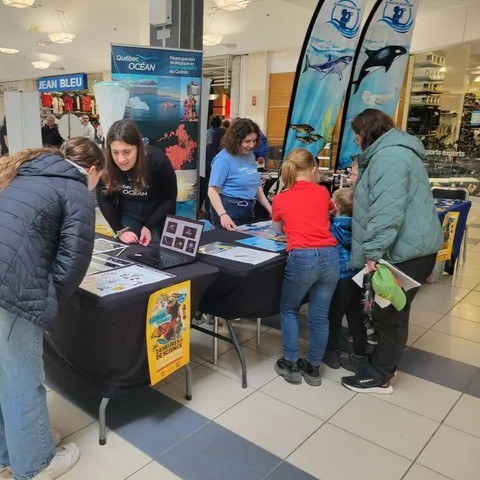 |
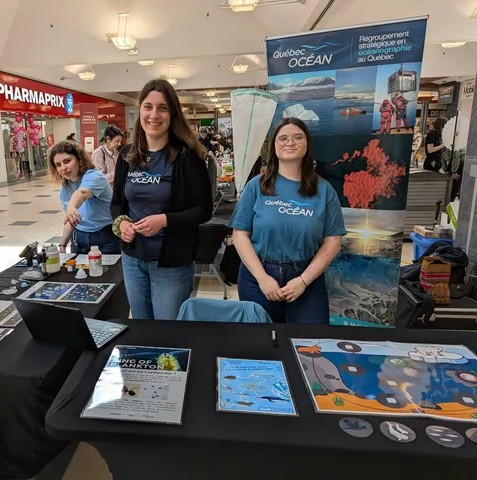
Garence Thomas-Durand, Chloé Jamin et Brithany Beaudoin in Rimouski
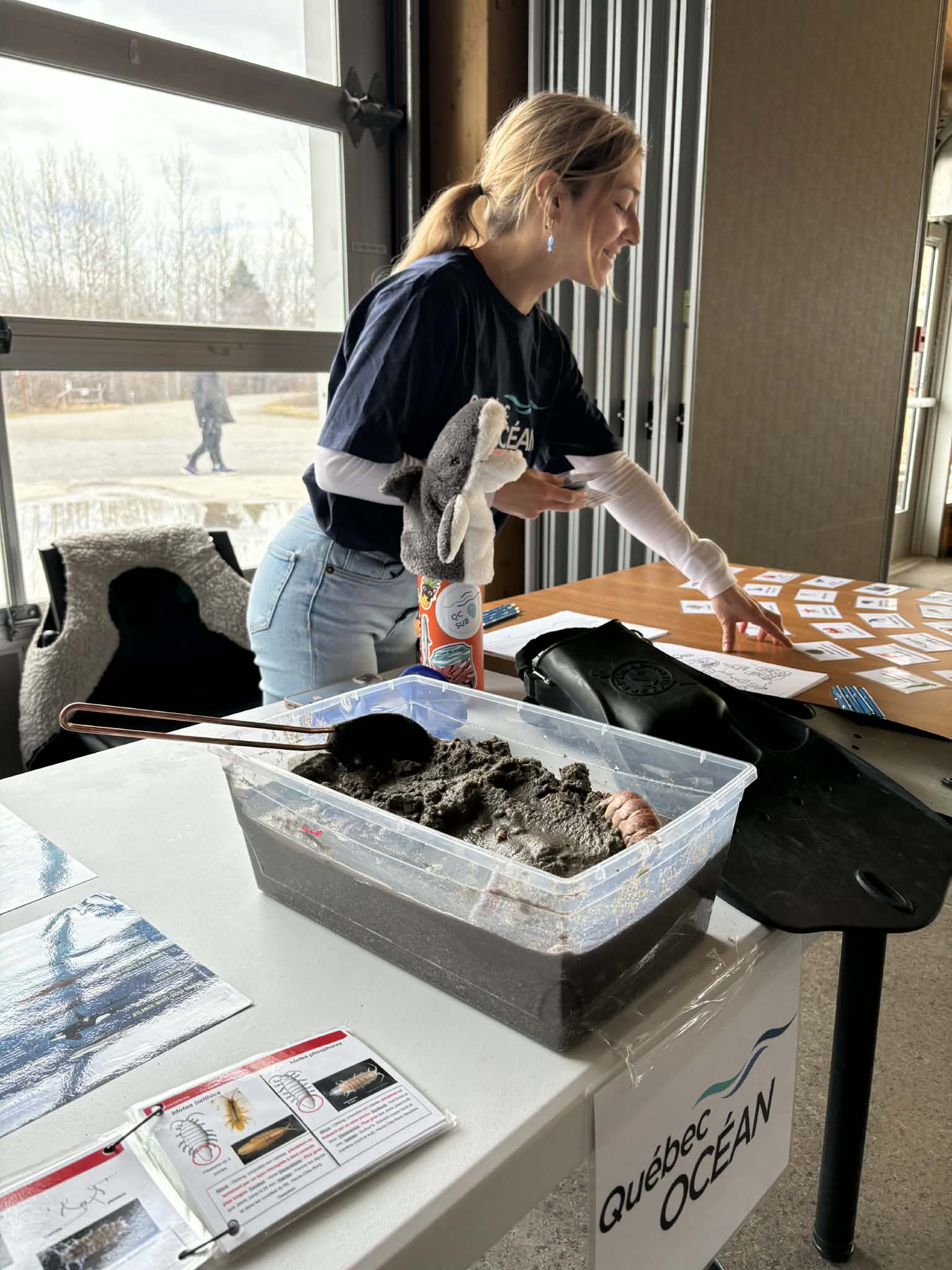
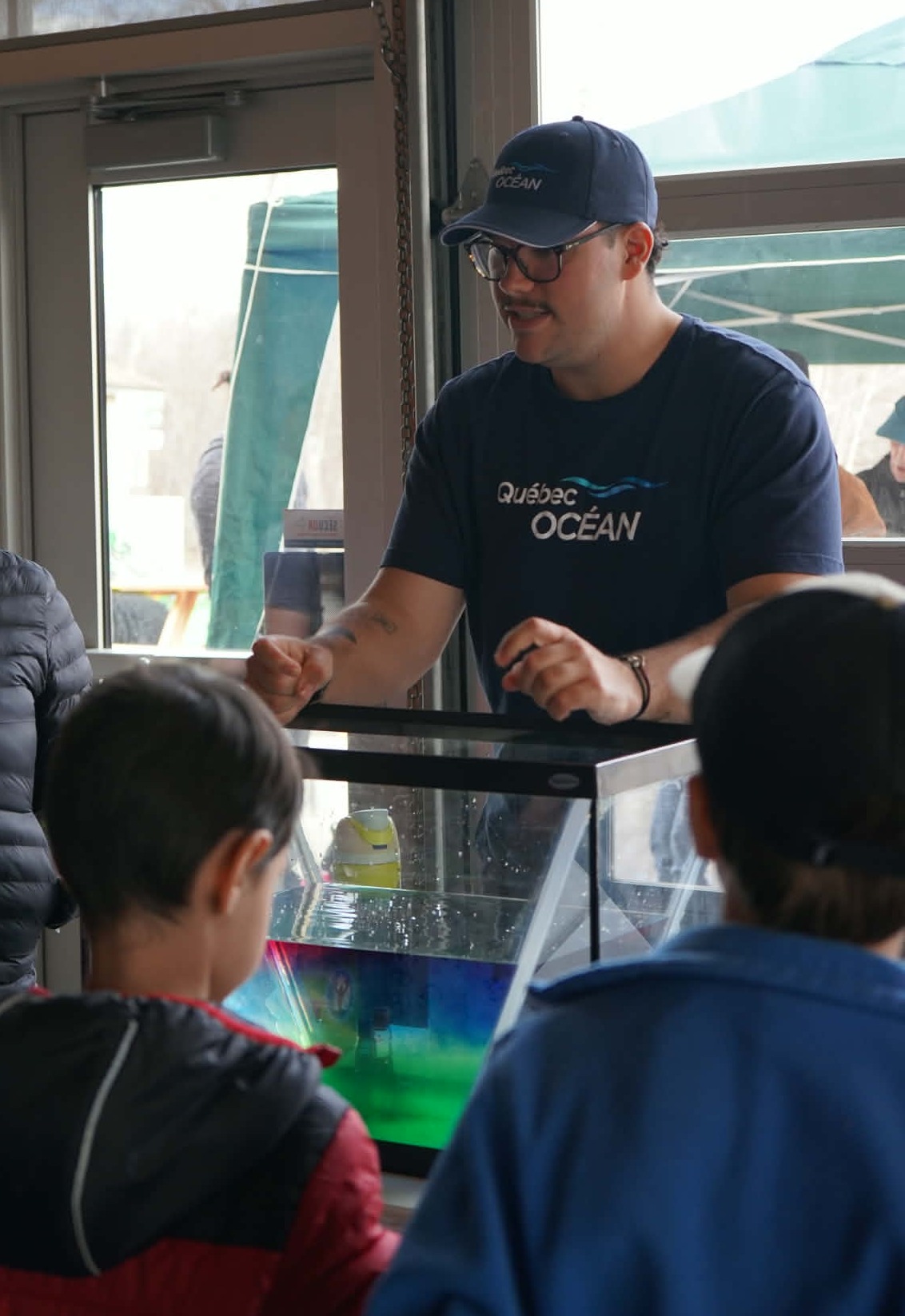
In Chicoutimi, we presented an activity on the water masses of the St. Lawrence River, their circulation, and their distribution in the estuary and the gulf. Through visual and interactive experiments, participants gained a better understanding of stratification phenomena and the exchanges between water layers. An activity on sediment cores demonstrated the importance of studying them for understanding marine environments, the history of the St. Lawrence, and changes in environmental conditions over time—including climate change, inputs of organic matter, and certain natural and human-induced disturbances.
|
|
|
Greta Capelli et Mathis Bernard in Chicoutimi
In Rimouski, we organized a plankton identification activity—covering everything from microalgae to zooplankton—to help participants understand their vital role as the “heroes” of the St. Lawrence River. Using a microscope, participants were able to observe these tiny microorganisms, which are present by the millions in the river’s waters. We also demonstrated how the accumulation of pollutants in the marine environment affects these organisms and higher trophic levels. In both cities, we offered participants an interactive game to help them learn to recognize different species found in the marine environment and understand the connections between them in the food web, starting with plankton at the base of the food chain.
Thank you to our volunteers, our partners at Technosciences Est-du-Québec, MMON (for the whales identification guides) and the organizers of the 24-Hour Science Event.
See you again in 2027 to celebrate science once more!